The Local Reality of Disposable Vapes on the Ground
June 19th, 2026
Recycle Ann Arbor often receives inquiries from residents on how to dispose of vapes responsibly. Unfortunately, there is no easy answer. Washtenaw County does not accept disposable vapes at its household hazardous waste disposal program. The nearest responsible drop-off location we've identified is ERG in Livonia, which is about 45 miles away and charges $20 per visit (for up to 25 lbs of any accepted items, including vapes). This problem stems from an industry that has not been required to establish the necessary infrastructure for the disposal of its products.
Vapes Are Setting Recycling Facilities on Fire
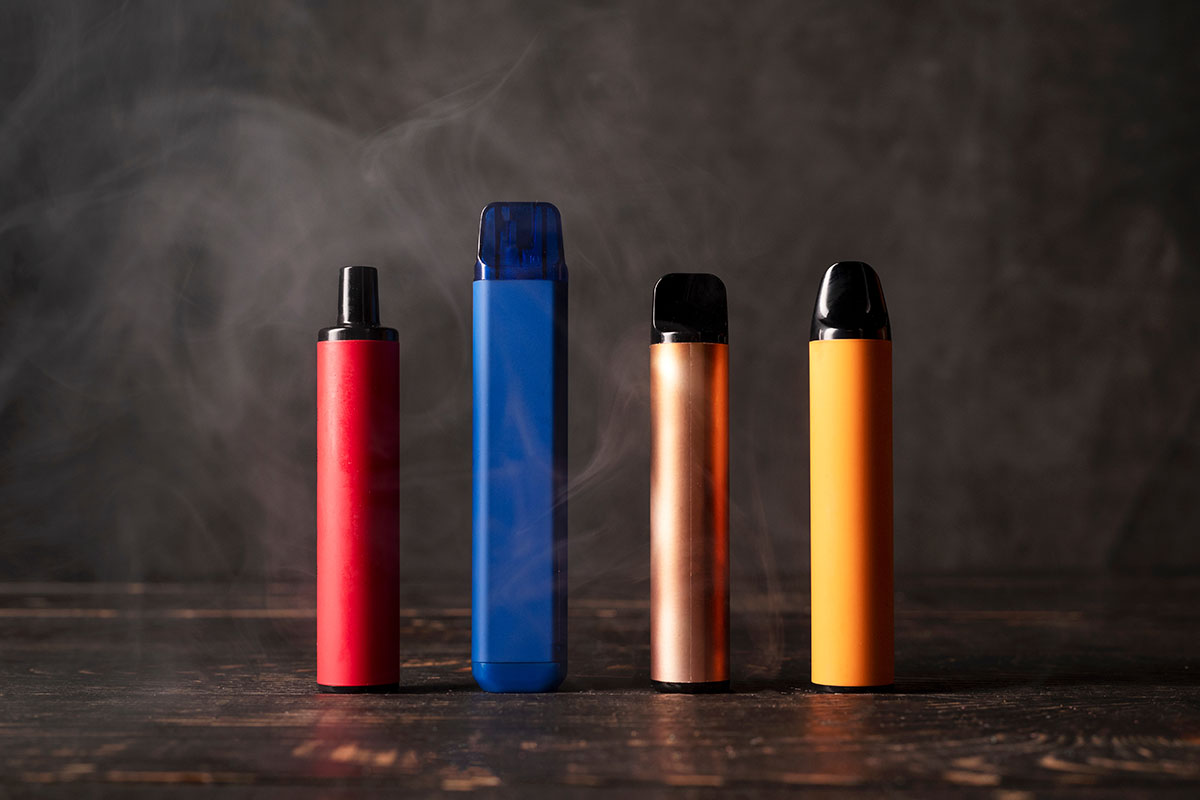
Disposable vapes are single-use electronic cigarettes sold at gas stations, convenience stores, and smoke shops. They are inexpensive, popular, and nearly impossible to dispose of safely. Each vape contains a lithium-ion battery, a heating coil, plastic casing, and liquid nicotine or THC. None of these components should be placed in a recycling bin or trash can, yet that is exactly where most end up.
An estimated 1.2 billion disposable vapes enter the U.S. waste stream every year, and this number continues to grow as manufacturers actively market these devices. They even refer to them as “daily disposables,” a term that clearly indicates they are designed for single-use and quick disposal.
Once a vape is collected by a recycling truck or facility, it poses a significant hazard. The lithium-ion battery inside, though small, is chemically identical to those found in laptops or power tools. If crushed, punctured, or shredded during processing, it can trigger a rapid, self-sustaining chemical reaction that generates intense heat and is notoriously difficult to extinguish. Surrounded by paper, plastic, and cardboard, it does not take much to start a fire. Understanding these risks highlights the importance of proper disposal methods and the need for responsible handling protocols by the industry that produces these devices.
The Numbers Are Getting Worse
According to Fire Rover, a fire suppression company that operates detection systems at nearly 800 facilities across the United States and Canada—including at our Zero Waste Material Recovery Facility (MRF) in Ann Arbor—fires at MRFs and transfer stations increased by 20% in 2024 compared to the previous year. In 2025, the highest number of publicly reported incidents was recorded since monitoring began. When comparing the period from 2022 to 2025 against the prior six-year baseline, the industry has seen a 26% increase in fire incidents.
These fires are not insignificant. A single fire can destroy a facility, contaminate surrounding materials, expose workers to toxic smoke, and shut down recycling services for an entire community for months. In a MRF, a vape that arrives whole on the tipping floor is likely to be shredded or crushed by the time it reaches the end of the processing line. This is when the battery can fail and ignite a fire.
A 2025 PIRG analysis estimated that fires in waste facilities caused by disposable vapes cost at least $95 million per year in the United States alone.
Why Vapes Are Uniquely Dangerous
Vapes are not recyclable AND they shouldn't be thrown away in regular trash. Disposable vapes are complex products made up of multiple materials and hazards, and they lack a single effective end-of-life disposal method. Their lithium batteries classify them as hazardous waste in most jurisdictions. Additionally, the nicotine or THC liquid they contain is classified as a controlled substance and poses a biohazard risk. The plastic casing and metal heating coil are technically recyclable, but not in a mixed-stream recycling facility such as ours. As a result, there are very few drop-off points available for disposing of these products responsibly.
Consumers who want to dispose of a vape responsibly have almost nowhere to go. Hazardous waste drop-off events are infrequent and frequently go unadvertised. Most electronics take-back programs do not accept vapes, and retail take-back initiatives are not available on a large scale. Consequently, many vapes end up in the trash.
Why Can’t Vapes Be Taken to the Drop-Off Station?
A common question from well-meaning residents is why we do not collect vapes separately. The reason is that accepting vapes would require specialized storage, handling protocols, trained staff, regulatory permits, and liability coverage, all of which we simply cannot afford. Over the past five years, our insurance costs have tripled due to industry-related fires. The responsibility for building the necessary infrastructure lies with the manufacturers of these products, not with the nonprofit or municipal facilities that process the community's recyclables.
The Environmental Impact Extends Beyond Fires
Even vapes that do not ignite fires still cause environmental harm. A researcher at the University of California, San Francisco, has documented that lead and mercury from vape pens can leach into soil and groundwater when these items are discarded in landfills. Additionally, the Surfrider Foundation reported a 150% increase in the number of vapes collected during beach cleanups from 2021 to 2024, highlighting the extent of the littering problem. When vapes end up in waterways, they introduce persistent chemicals—such as heavy metals, plastics, and nicotine—directly into ecosystems.
What Extended Producer Responsibility Means
Extended Producer Responsibility, or EPR, is a policy framework that shifts some of the cost and responsibility for managing end-of-life products from municipalities and taxpayers to the companies that manufacture and sell these products. The logic is straightforward: the entity that designs a product, profits from its sale, and chooses to make it disposable should also bear responsibility for what happens to it when it is discarded.
EPR programs typically require manufacturers to fund or operate take-back systems, establish collection infrastructure, and meet recycling or safe disposal targets. Such laws for items like paint, mattresses, and batteries have been implemented in multiple U.S. states, and EPR for packaging is currently active in seven states, with more on the way. These successful models demonstrate how producer responsibility can effectively reduce waste and environmental harm, strengthening the argument for similar policies for vaping products.
For vapes specifically, EPR would mean manufacturers pay into a system that creates safe, convenient, and widely available drop-off options, preventing these products from entering the general waste stream before they ever reach a collection truck or a sorting line. While implementing EPR for vapes would require initial investments from manufacturers, it would ultimately reduce costs for communities and improve environmental outcomes, making it a practical and effective solution.
Maine Leads the Way – Michigan Can Do it Too
In 2026, Maine became the first US state to enact an EPR program specifically for vapes and e-cigarettes. The law requires manufacturers to enroll in a producer responsibility organization by November 1, 2027, and fund a system of safe drop-off sites. Collection points must be located within 15 miles of 90% of the state's population. Consumers are incentivized to return devices by receiving a $2 reward for each item. Retailers selling vapes must become collection points within three years. This program serves as a working model for the rest of the country.
The vape industry has made minimal efforts to address the waste and fire crisis it has caused. According to a significant industry fire safety report, the industry's response can be described as doing "the bare minimum to invest in the technology needed to address" the problem. Manufacturers have not funded the necessary take-back infrastructure, redesigned products for safer end-of-life handling or made meaningful contributions to fire suppression research or facility safety. They continue to aggressively market disposable products, including to young people, while the communities, recyclers, and others bear the associated costs and risks.
The burden and cost of this situation are borne by waste workers who are exposed to fires and toxic smoke, by MRF operators whose facilities are damaged or destroyed, by municipalities whose recycling programs are disrupted, and ultimately paid by taxpayers and ratepayers who fund these programs. Meanwhile, manufacturers who sell products without a safe end-of-life pathway continue to profit without facing accountability.
"Facilities are being asked to manage a fire risk created largely outside their control, and waste and recycling employees should not be treated as a default front-line response team." Ryan Fogelman, Fire Rover
The largest volume of disposable vapes comes from manufacturers based in China, primarily Shenzhen iMiracle. Additionally, tobacco companies such as British American Tobacco (through Vuse), Philip Morris, and Altria have significant market shares in the U.S. through their own vape brands and distribution channels.
What Needs to Happen
Maine’s law serves as a model that Michigan should adopt, and the federal government should take action as well. Implementing a national Extended Producer Responsibility (EPR) framework for vapes would create a level playing field across state lines, prevent manufacturers from shifting sales to less-regulated markets, and create the scale needed to build a genuinely functional collection infrastructure.
In the short term, the vape industry should be required to fund hazardous waste drop-off infrastructure at retail points of sale. Every store that sells vapes should also accept them back for disposal. Maine’s law explicitly mandates that retailers serve as collection points within three years of program approval. This model is scalable and places the collection infrastructure right where the product enters the market. The costs of building and operating this system should be covered by product revenue, not by city budgets.
Additionally, the broader public, including vape users, needs to recognize that there is currently no safe way to dispose of vapes. Simply throwing them in the trash is not a viable solution. Instead, consumers should demand that manufacturers fund a system that enables safe disposal.
Excluding Chinese producers, tobacco companies in the vape market collectively generated approximately $95 billion in revenue in 2025. The annual cost of the fires caused by their products in US waste facilities is estimated at $95 million, which is roughly one-tenth of one percent of their combined revenue.
What You Can Do Right Now
DO NOT dispose of disposable vapes in your recycling bin or trash. Again, in Washtenaw County, the nearest responsible disposal option is ERG in Livonia.
Walmart stopped selling all vaping products in 2019 and has not reintroduced them. Similarly, Target does not sell vapes or e-cigarettes at any of its locations. As the two largest retailers, they are typically not known for turning down profits; however, they recognize that, as major retailers, they would be held responsible for taking action.
But WE can take action and YOU can too. Contact us to express your support for vape Extended Producer Responsibility (EPR) legislation. If you use vapes, consider that these products are designed to be thrown away with no plan for disposal afterward. Ask yourself whether that is a design worth supporting.